Zoo & Aquarium Exhibit Glass Restoration — We Restore What Animals, Visitors & Time Destroy
Zoo and aquarium exhibit glass faces damage conditions that no other glass surface in the world encounters — and most glass restoration companies have never worked inside a zoological facility. Glass Restoration Inc. has. We have restored exhibit glass at ZooTampa at Lowry Park and Busch Gardens Tampa Bay — including exhibits not visible to the public — working inside active animal exhibits under curator supervision, restoring viewing panels that had degraded from optically clear to nearly opaque. Busch Gardens has called us back repeatedly over the past 10 years, across Lion, Cheetah, Hyena, African Penguin, Capybara, Tiger, Chimpanzee, and Crocodile exhibits. We travel nationally for zoological engagements. We operate under complete confidentiality where it's required, and we're proud to name the facilities that have authorized us to share their name. We understand the specific damage mechanisms that zoo glass faces — from the inside and from the outside — in a way that no general glass restoration company can match.
The 18-Month Problem — Why Zoo Glass Degrades So Fast
Most zoo exhibit viewing panels go from optically clear at installation to significantly degraded within 18 months. Not because the glass is defective. Not because the facility is doing anything wrong. Because zoo glass faces simultaneous damage from three directions that no other glass surface encounters — animals on one side, visitors and environmental conditions on the other, and cleaning crews caught in the middle trying to maintain clarity with tools and techniques that were never designed for this application. Glass Restoration Inc. understands all three damage vectors because we have worked on all three. We restore zoo glass to optical clarity and we can establish a maintenance schedule that prevents the 18-month degradation cycle from repeating.
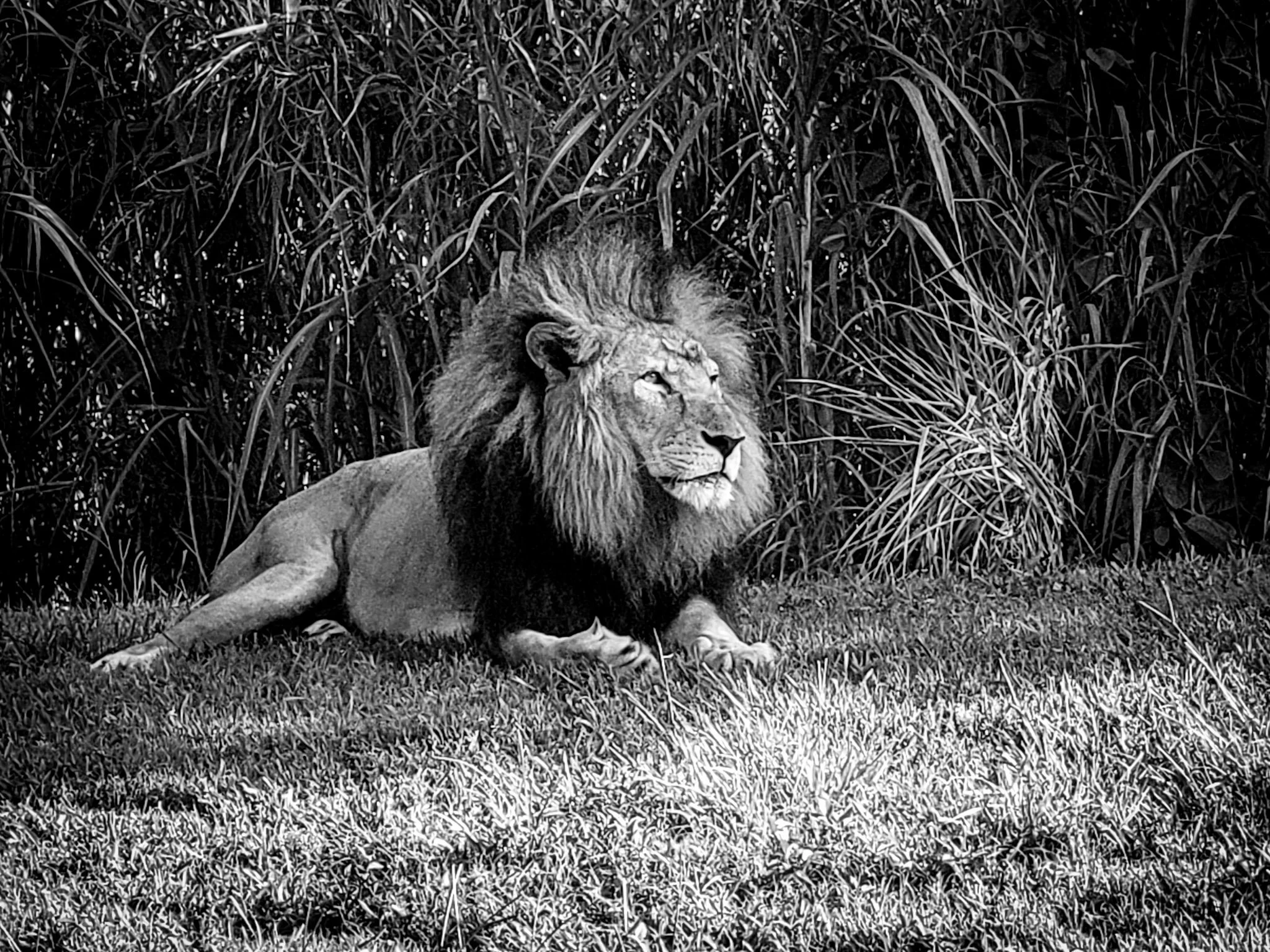
Lions — Claw Scratch Damage
Lions and cheetahs scratch exhibit glass directly with their claws — long, deep, parallel scratch patterns that are immediately visible to every visitor standing at the viewing panel. These scratches are typically the deepest animal-contact damage we encounter in zoo work and require the most aggressive restoration approach. Working inside a big cat exhibit requires strict Lockout/Tagout compliance and full coordination with animal care staff to ensure the animals are secured before work begins. Big cats do not come when called. If we arrived and the animals had not been moved to their off-exhibit holding area — we waited. Patient, professional, and prepared to work the moment the exhibit was cleared. Glass Restoration Inc. has restored the lion and cheetah exhibit viewing panels at Busch Gardens Tampa Bay — removing claw scratch damage that had accumulated over months of daily animal contact without requiring panel replacement.
Rapid Response — The Capybara Exhibit Emergency
When the capybara exhibit glass (Before and After photo below) at Busch Gardens Tampa Bay degraded to the point that guests could no longer see through it, the facility needed a fast turnaround, not a normal project timeline. Glass Restoration Inc. mobilized quickly, restoring the panel from completely opaque back to full optical clarity — and finished ahead of the facility's schedule. Zoo exhibits can't stay closed while a glass company works through a standard queue. When it's urgent, we move
Hyenas — Fur Abrasion Damage
Hyena fur abrasion is one of the most unusual and least understood glass damage mechanisms in zoological facilities. Hyenas roll in dirt and then press their coarse, debris-laden fur against the viewing glass repeatedly — creating an abrasive action that is invisible in any individual contact but accumulates into significant surface degradation over weeks and months. The result is a uniformly hazed panel that looks permanently etched but is in most cases fully restorable. Glass Restoration Inc. has restored hyena exhibit glass at Busch Gardens Tampa Bay — removing the accumulated fur abrasion damage that most facilities assume is permanent.
Otters — The Most Destructive Animal to Exhibit Glass
Of every animal species we have encountered in zoo glass restoration work — otters are the most destructive to exhibit glass by a significant margin. Their constant activity, their body contact with the glass, and the abrasive quality of their interaction with the viewing surface creates damage that accumulates faster than any other species we have worked with. At Busch Gardens Tampa Bay, one exhibit converted from otters to African Penguins — and we restored the glass for the new penguin exhibit. Then restored it again 6 years later. Even penguins — not typically considered a high-contact species — generated sufficient glass damage over time to require a restoration cycle. If your facility has otters or penguins behind glass — plan for regular restoration maintenance. There is no alternative.
Crocodiles & Reptiles — Waterline Damage
Crocodile exhibit glass faces its most aggressive damage within approximately 12 inches of the waterline. The combination of mineral-laden water constantly splashing and evaporating on the glass surface, biological material from the enclosure water, and physical contact from animals entering and exiting the water creates a damage band at waterline level that is unlike any other glass damage condition we encounter. Glass Restoration Inc. has restored the crocodile exhibit viewing panels at Busch Gardens Tampa Bay — specifically addressing the waterline damage band that accumulates fastest and degrades visitor viewing experience most significantly.
Chimpanzees & Primates — Contact & Impact Damage
Primate exhibits generate glass damage from direct physical contact — hands, faces, and objects pressed and dragged against the viewing surface — combined with the impact of primates throwing objects and striking the glass. The result is a combination of surface scratches from contact abrasion and impact marks from striking events. Glass Restoration Inc. has restored the chimpanzee exhibit viewing panels at Busch Gardens Tampa Bay — working under curator supervision in active primate facilities where access protocols and animal management coordination are essential to every job.
Visitor Vandalism — The Damage Nobody Talks About
Zoo facilities rarely discuss visitor vandalism on exhibit glass publicly — but it is one of the most consistent damage sources we encounter in zoological work. Visitors carve initials, symbols, names, and insignias into exhibit glass with keys, rings, and other metal objects. A single vandalism event can leave deep, deliberately cut scratches across a viewing panel that would cost many thousands of dollars to replace. Glass Restoration Inc. removes carved vandalism from zoo exhibit glass — including deep intentional cuts that other restoration operators cannot address without significant distortion. We treat these repairs with complete discretion. The facility never needs to publicize the damage or the repair.
Improper Cleaning — The Well-Intentioned Problem
Zoo exhibit glass gets cleaned frequently — and frequently with the wrong tools and techniques. Cleaning crews working under time pressure use abrasive pads, improper squeegees, and cleaning compounds that are not appropriate for thick laminated viewing panels. Over time the accumulated cleaning damage compounds the animal contact damage to produce panels that are degraded from both directions simultaneously. Glass Restoration Inc. works with zoo facility managers to establish proper cleaning protocols for exhibit glass that maintain clarity between restoration cycles — preventing the well-intentioned cleaning damage that accelerates degradation as much as the animals do.
In some cases, we've been called in specifically to correct the work of a previous vendor — distorted, warped panels left behind by a less experienced operator using the wrong process on high-value exhibit glass. Restoring exhibit glass to true optical clarity, without introducing distortion, isn't a skill every glass company has. It's the entire skill.
Hard Water and Mineral Deposits, Polished Away
Outdoor exhibit glass takes the same hard water and mineral deposit damage as any other Florida glass surface — irrigation overspray, misting systems, and enclosure water splash all leave mineral haze that most facilities assume requires replacement. Glass Restoration Inc. removes mineral buildup and hard water etching from exhibit glass on-site, as part of the same visit.
Our Zoological Work Protocol
Glass Restoration Inc. operates under a complete confidentiality protocol for zoological engagements — facility layouts, security measures, animal management procedures, and behind-the-scenes operations remain entirely private. We do not share photographs of restricted areas without explicit permission. Where a facility has authorized us to share their name — like Busch Gardens Tampa Bay and ZooTampa — we're proud to. Where confidentiality is required, we hold it completely. We coordinate directly with curators and facility directors on access scheduling, animal management during work, and safety protocols specific to each exhibit environment.
We operate in compliance with OSHA safety standards including Lockout/Tagout protocols for motorized containment systems and hydraulic gate assemblies where applicable. Our process uses water-based systems with zero toxic compounds — animal-safe in every application. Dust mitigation protocols are implemented in all enclosed exhibit environments.
Recognized by the Industry. Trusted by Zoological Facilities.
Glass Restoration Inc. has been listed in the Glass Magazine Sourcebook — the definitive national reference publication for the glass industry — for three consecutive years. We are the only Gulf Coast glass restoration specialist in its pages. We travel nationally for zoological engagements that match the standard of the facilities we serve. If your zoo or aquarium has exhibit glass that has degraded beyond what your current maintenance program can address — call for an assessment.
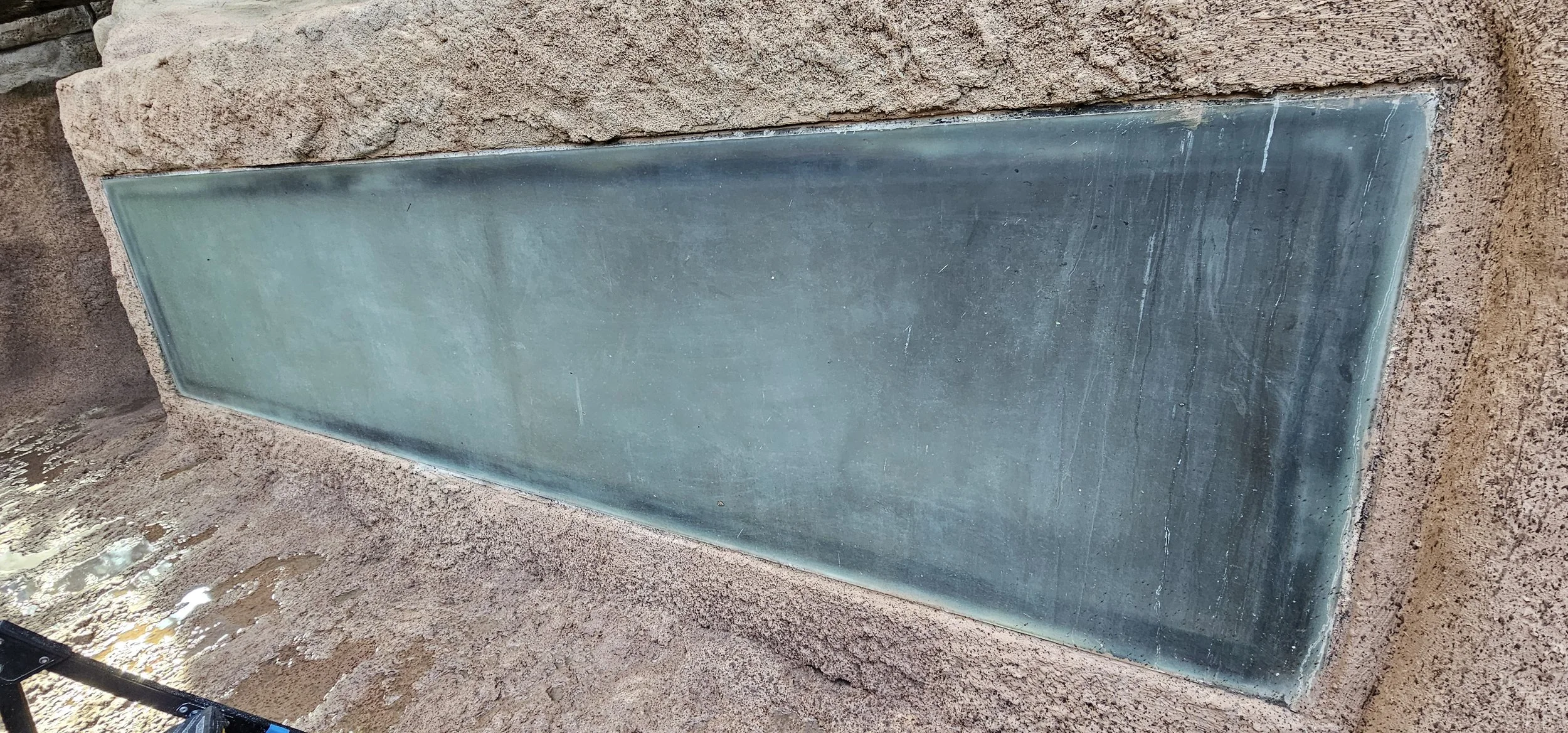
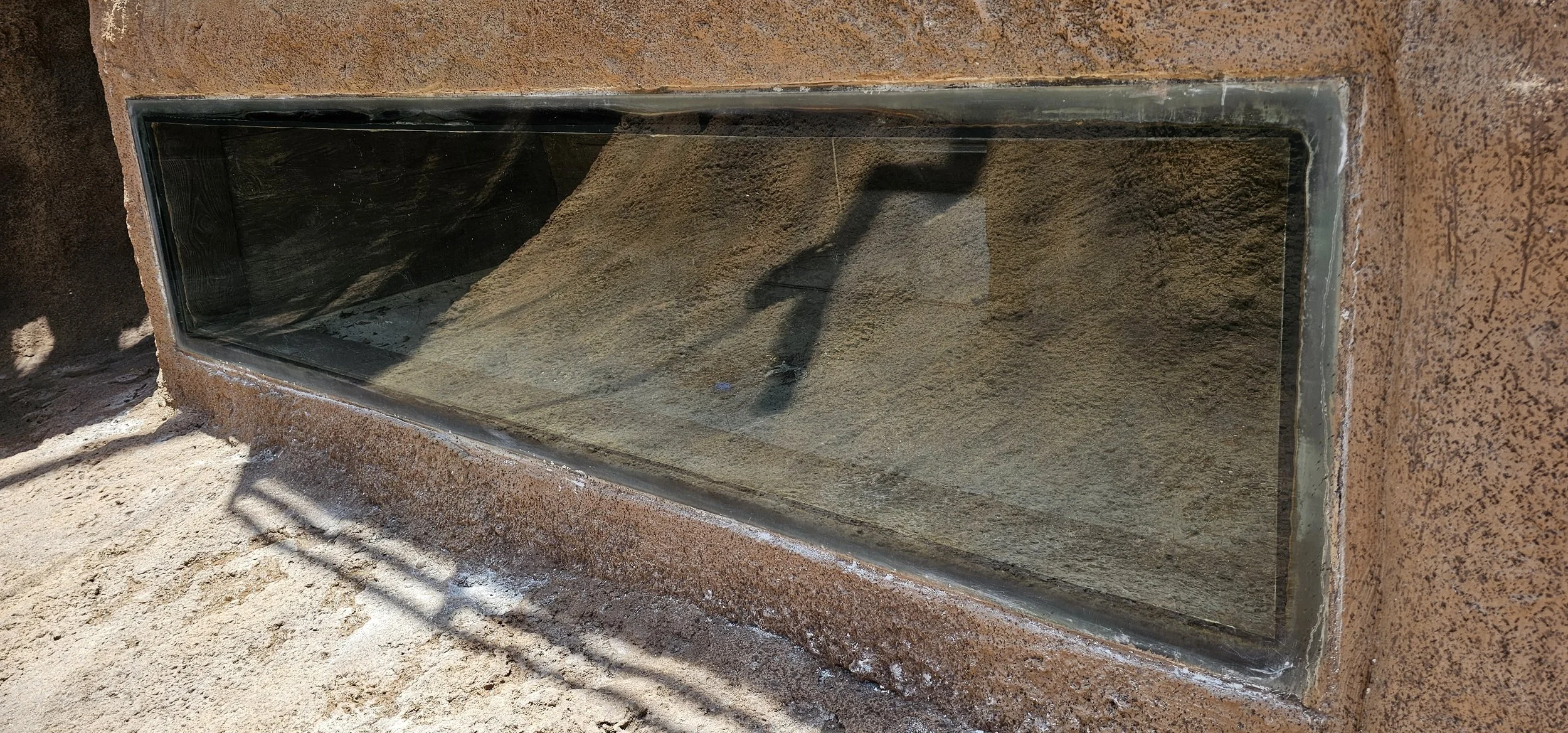
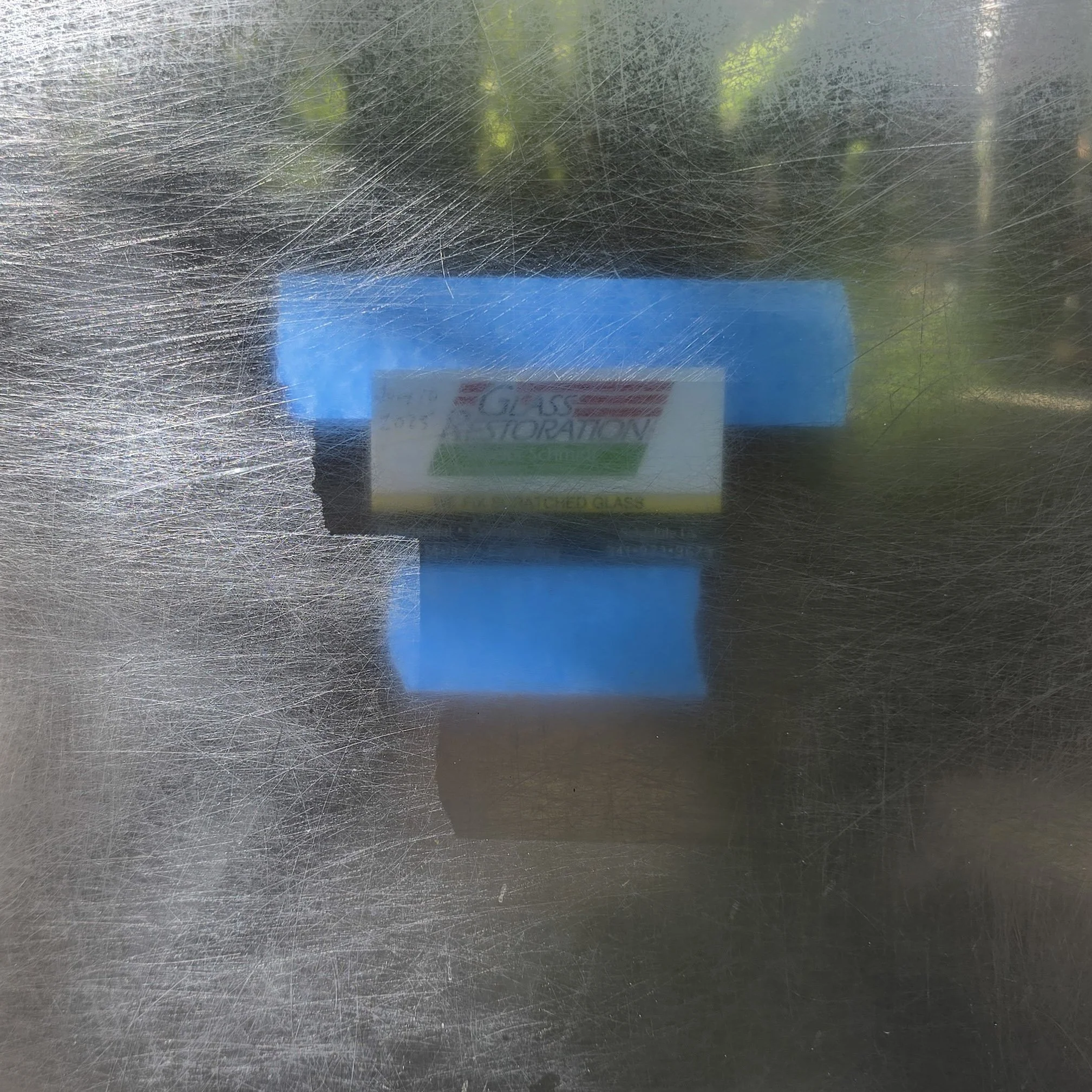
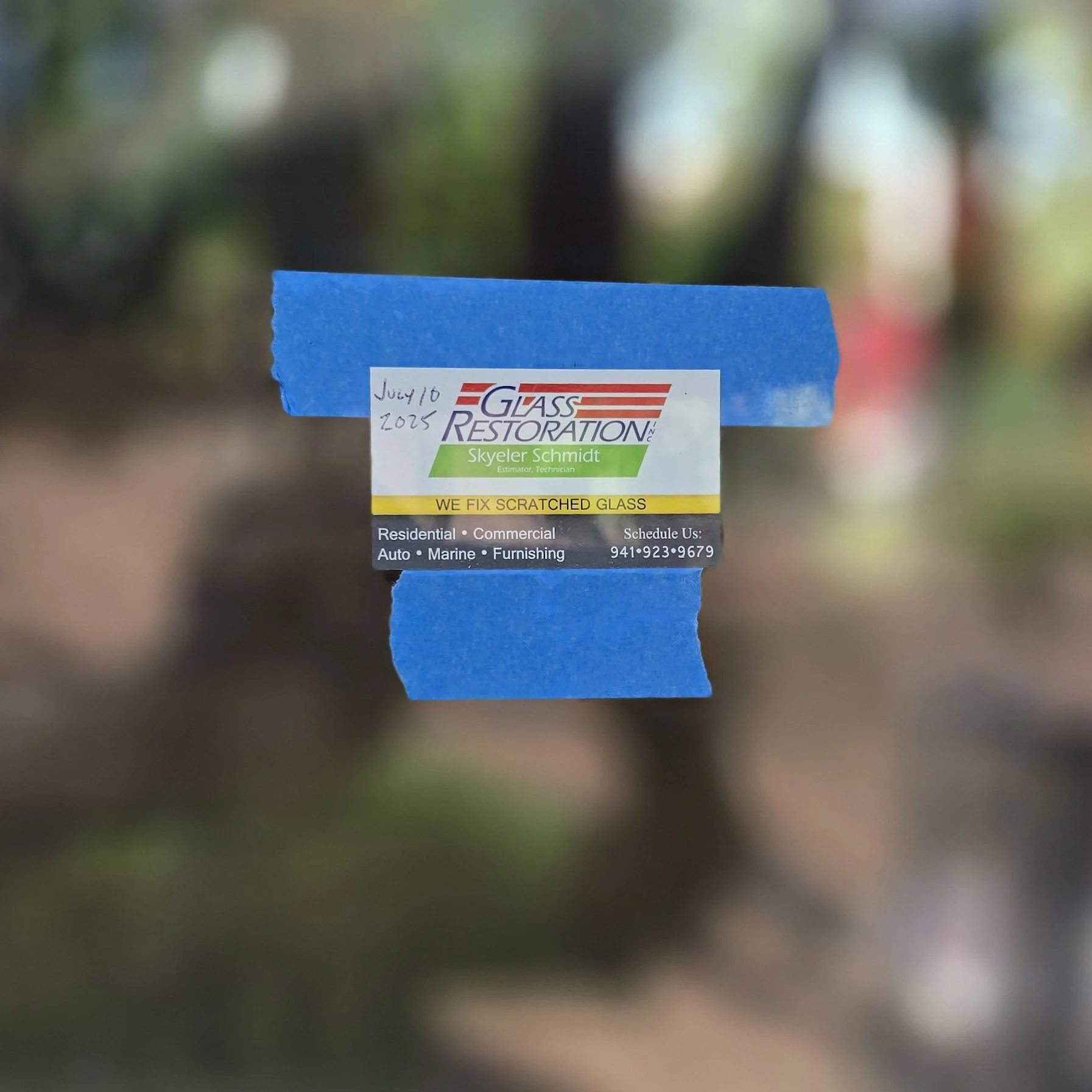
These are tiger claw scratches on a zoo exhibit viewing panel. The business card on the clear side shows what the glass should look like. The scratched side shows what 18 months of tiger contact produces. Watch what happens after Glass Restoration Inc. goes to work.
Zoo exhibit glass, Animal side Before and After